


SHINSUI asian pear LARGE SEMI-DWARF (OHxF97)
Regular price
$45.00
Shipping calculated at checkout
15 in stock
Need more? Contact us
This tree needs pollination
Compatible trees:
KOSUI asian pear DWARF (OHxF87)
KOSUI asian pear DWARF (OHxF87)
NIJISSEIKI asian pear DWARF (OHxF87)
NIJISSEIKI asian pear DWARF (OHxF87)

SHINSEIKI asian pear SEMI-DWARF (OHxF87)
SHINSEIKI asian pear SEMI-DWARF (OHxF87)
CHOJURO asian pear DWARF (OHxF87)
CHOJURO asian pear DWARF (OHxF87)
🍐 Asian pear tree SHINSUI (Pyrus pyrifolia ‘Shinsui’)
🌸 Origin and type
- Species: Pyrus pyrifolia (Asian pear or ‘nashi’)
- Origin: Japan 🇯🇵
- Japanese name: 新水 = Shinsui (“new water” → reference to its abundant juice)
- Origin: Japanese hybrid (1940s–1960s)
- Type: deciduous fruit tree, highly ornamental
🌳 Tree characteristics
- Habit: rounded to slightly spreading
- Vigour: medium to strong
- Mature height: 4 to 5 m (depending on rootstock)
- Hardiness: USDA zones 5 to 9 (down to approx. –25°C)
- Exposure: full sun, warm and sheltered location
- Soil: rich, loose, well-drained, neutral to slightly acidic pH
🍏 Fruit
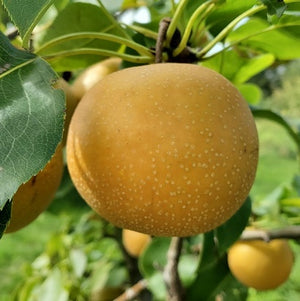
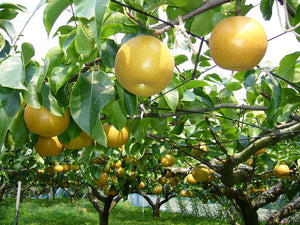
- Shape: round, apple-pear type
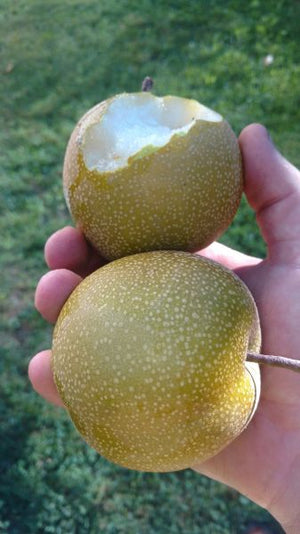
- Skin: thin, golden to light brown, slightly russeted
- Flesh: white, crisp, very juicy
- Flavor: mild, sweet, and fragrant, among the finest of nashi pears
- Storage: good (1–2 months in cold storage), but best when freshly picked
🌼 Flowering and pollination
- Flowering: April to May (white, very decorative)
- Pollination: not self-fertile – requires another nashi tree flowering at the same time
- 🔗 Compatible pollinators: Hosui, Kosui, Chojuro, Yoinashi
- Natural pollinators: bees and bumblebees
🍂 Harvest
- Period: late August to early September
- Maturity: pick ripe from the tree (does not ripen after harvest)
- Yield: regular and abundant with good pollination
🛠️ Cultivation and care
- Planting: fall or early spring.
- Watering: regularly for the first few years, then moderately.
- Pruning: winter (thin out the branches) + thin out the fruit to make it grow larger.
- Fertilization: compost or well-rotted manure every spring.
- Care: mulching recommended to retain moisture
- Diseases: generally tolerant, but watch for fire blight and scab
🍽️ Uses
- Eat fresh (the ultimate dessert fruit)
- In fruit salads, Asian dishes, or carpaccios
- Very thirst-quenching, low in acidity
💡 Advantages of Shinsui
✅ Exceptional flavor, very sweet and aromatic
✅ Crisp and juicy texture
✅ Beautiful spring blossoms
✅ Good hardiness for an Asian pear tree
✅ Reliable production with adapted pollination
Hardiness Zones
Number of years for production
2 ans

