


Hybrid chestnut 'Marsol'
Shipping calculated at checkout
136 in stock
Need more? Contact us
This tree needs pollination
Compatible trees:
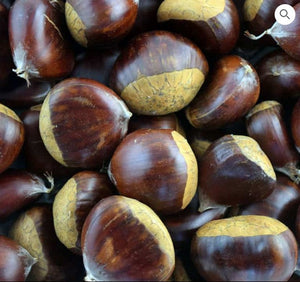
Precoce Migoule Chestnut
Precoce Migoule Chestnut
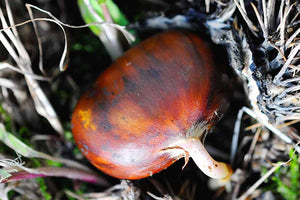
Hybrid chestnut 'Labor day'
Hybrid chestnut 'Labor day'
For zone minimal 5b
Plant with Precoce migoule and Labor day for pollination
The Marsol chestnut tree (Castanea sp.) produces very large nuts (26 grams on average), the attractive reddish colored nuts have a good flavor and peel well. Coming from a cross of open-pollinatedCastanea sativa X crenatafrom northern France, it ripens at the end of September. Our seedlings come from parent trees in Northern Michigan that have had sporadic winter doses of -29 celcius. Chestnut trees are magnificent in their leaf shape, their rarity, their flowering and finally the big bugs in October.
Chinese chestnut trees with European x Japanese hybrid chestnut trees is a pollen incompatibility that causes the hybrid nuts to rot. While Chinese chestnuts are resistant to chestnut blight, European x Japanese hybrids are susceptible, creating a further disease-related issue.
- Cause: A pollen incompatibility reaction between the two types of trees triggers the nut decay. For example, the cultivar 'Colossal'—a European x Japanese hybrid—can have up to 40% of its nuts affected by IKB when pollinated by a Chinese chestnut.
- Symptoms: This condition causes the nut kernels to rot internally, making the nuts unmarketable.
- Solution: Growers are advised to plant either the European and Japanese hybrids together in an orchard or Chinese chestnuts in a separate orchard, but not to mix the two types in the same orchard
Hardiness Zones
Growth habit (tree shape)
Mature height
Mature width
Growth speed
Flowering period
Number of years for production
8 years
Harvest month
Light
Uses / Special remarks

