
Early Blush Semi-Dwarf Apricot Tree (Mustang)
Shipping calculated at checkout
16 in stock
Need more? Contact us
This tree needs pollination
Compatible trees:
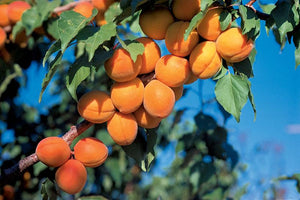
Harcot semi-dwarf apricot
Harcot semi-dwarf apricot
🍑 Early Blush Apricot Tree
🌸 Origin and type
-
Species: Prunus armeniaca
-
Origin: United States, New Jersey
-
Breeder: Rutgers University
-
Selector: Dr Joe Goffreda
-
Type: Very early-ripening apricot tree
-
Introduction: Early Blush (selection RR17-62 × NJA13)
-
Uses: Fresh fruit production and processing.
Early Blush is known for its very early ripening and the eating quality of its fruit.
🌳 Tree characteristics
-
Habit: Upright to semi-spreading.
-
Mature height: About 3.5 to 5.5 m, depending on the rootstock and training.
-
Spread: About 4 to 6 m.
-
Hardiness: Zones 4 to 8 according to some horticultural references.
-
Exposure: Full sun.
-
Soil: Fertile, deep and well drained.
-
Growth: Moderate to vigorous.
-
Time to bearing: Generally after a few years.
-
Productivity: Good when pollination and weather conditions are favourable.
🍑 Fruit
-
Shape: Round to slightly oval.
-
Size: Medium to large.
-
Skin: Golden orange with a beautiful orange-red blush.
-
Flesh: Orange, tender and juicy.
-
Texture: Melting when ripe.
-
Flavour: Sweet, aromatic and particularly flavourful for an early apricot.
-
Stone: Generally clingstone or semi-clingstone.
-
Harvest: Very early, generally a few weeks before Harcot and OrangeRed.
-
Uses: Fresh eating, jams, compotes, pies and pastries.
-
Storage: Short to medium; pick gently and eat promptly when fully ripe.
🌼 Flowering and pollination
-
Flowering: Early, in spring.
-
Flower colour: White to pinkish.
-
Self-fertility: Cross-pollination is recommended to promote good fruit set.
-
Pollination: Provide another apricot cultivar whose flowering coincides with Early Blush.
Pollinizers to consider:
-
Harcot
-
Goldcot
-
Harogem
-
Goldrich
Compatibility and overlap in flowering must be verified before choosing a pollinizer.
🛠️ Growing and care
-
Planting: Spring or fall, outside periods of frost.
-
Watering: Regular during the first few years and droughts.
-
Pruning: Light summer pruning after harvest to open up the canopy.
-
Thinning: Recommended when fruit is too abundant, to encourage good size.
-
Fertilizing: Compost or fruit-tree fertilizer in spring, according to soil needs.
-
Drainage: Essential to prevent root problems.
-
Location: Choose a warm, sunny spot sheltered from wind.
🦠 Diseases and resistance
-
Brown rot: Can affect blossoms and fruit, especially in wet weather.
-
Bacterial canker: Can affect branches and the trunk.
-
Bacterial spot: Can damage foliage and fruit.
-
Fruit rot: Monitor damaged or overripe fruit.
-
Prevention: Encourage good air circulation and remove affected fruit and branches.
🍽️ Uses
-
Fresh eating.
-
Jams and jellies.
-
Compotes and purées.
-
Pies and pastries.
-
Home preserving and processing.
💡 Highlights
✅ Very early ripening for the first apricots of the season.
✅ Attractive fruit with beautiful orange and red colouring.
✅ Excellent eating quality for an early variety.
✅ Juicy, aromatic flesh.
✅ Starts the apricot harvest season earlier.
✅ Appealing for fresh-fruit enthusiasts and small orchards.
⚠️ Points to consider
-
Early blossoms are vulnerable to spring frosts.
-
Cross-pollination is recommended for regular production.
-
Ripe fruit needs careful handling.
-
Early harvest requires close monitoring of ripeness.
-
Susceptible to diseases favoured by wet conditions.
🌱 Why choose Early Blush apricot?
Early Blush is an excellent choice for apricot lovers who want a harvest right at the beginning of the season. It stands out for its colourful fruit, juicy flesh and particularly pleasant flavour for such an early variety.
An interesting variety to diversify the orchard and get an early start on apricot season!
Hardiness Zones
Growth rate
Years to production
3 years
Light
Uses / Special notes

