

MONTROSE apricot Semi-dwarf (Mustang)
Regular price
$65.00
Shipping calculated at checkout
Out of stock
Need more? Contact us
This tree needs pollination
Compatible trees:

MOORPARK apricot SEMI-DWARF
MOORPARK apricot SEMI-DWARF
TILTON apricot SEMI-DWARF
TILTON apricot SEMI-DWARF
Main characteristics
- Hardiness/cold resistance
- Very good. Able to withstand harsh winters. Tolerates USDA/Canada zones 5 and colder.
- Flowering
- Late flowering, allowing it to escape spring frosts in many regions.
- Pollination
- Self-pollinating (self-fertile): it can produce fruit without other varieties nearby, but cross-pollination often improves yield.
- Fruit
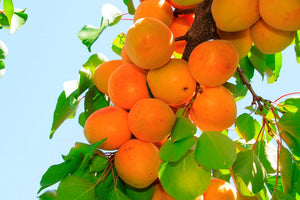
- Large to medium, yellow flesh with a nice red blush on the skin. Sweet taste. The pit (the hard part) is edible, resembling a sweet almond.
- Freestone/semi-freestone
- Freestone or semi-freestone depending on the source (i.e., the fruit separates relatively easily from the pit).
- Climate requirements
- Requires a fairly high number of winter chill hours: some sources cite 700-1000 hours below 45°F (7-8°C) to induce proper dormancy.
- Harvest period
- Mid-July in several regions (towards the end of summer).
Advantages
- Very hardy, good choice for cold regions where other apricot trees freeze or flower too early.
- Fruit with good taste.
- Resistant to spring frosts thanks to its late flowering.
- Self-fertile, so a second tree is not absolutely necessary, but it is still useful.
Limitations & considerations
- Chill hour requirements — if it doesn't get enough “chill hours,” flowering or fruiting may be reduced.
- Fungal diseases — in more humid or cool climates, there is a greater risk of fungus, especially if air circulation is poor or water stagnates.
- Very hot or very humid climates could pose challenges.
- Late maturity — if you are in a region with short summers or early autumns, you will need to check that the season is long enough for the fruit to ripen properly.
Growing tips
- Plant in full sun, well-drained soil, avoiding waterlogged soil.
- Mulch, compost, and maintain the soil well.
- Prune to encourage an open shape, allowing light and air to enter.
- Water during dry periods, but avoid excess stagnant moisture.
- Protect young trees (e.g., from late frost) if springs can be unpredictable in your area.
Hardiness Zones
Number of years for production
3 years
Light
Uses / Special remarks

