

RARITAN ROSA Semi-Dwarf Peach Tree (Bailey)
Shipping calculated at checkout
24 in stock
Need more? Contact us
This tree needs pollination
Compatible trees:
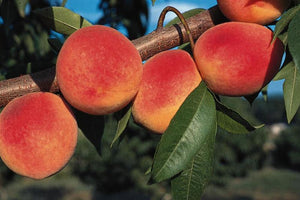
REDHAVEN semi-dwarf peach
REDHAVEN semi-dwarf peach

Peach Redstar
Peach Redstar
🍑 Raritan Rose Peach Tree
🌸 Origin and type
-
Species: Prunus persica
-
Origin: New Brunswick, New Jersey, United States.
-
Breeder: M.A. Blake, New Jersey Agricultural Experiment Station.
-
Introduced: 1936.
-
Parentage: J.H. Hale × Cumberland.
-
Type: White-fleshed peach tree.
-
Special feature: An old American variety known for its aromatic flavour and tender flesh.
-
Uses: Fresh eating, freezing and processing.
Raritan Rose is a traditional variety appreciated in home orchards and local markets.
🌳 Tree characteristics
-
Habit: Spreading, with abundant branching.
-
Mature height: About 3 to 5 m, depending on the rootstock and pruning.
-
Spread: About 3 to 4 m.
-
Hardiness: Considered sensitive to harsh winters; resistance depends on the rootstock and growing conditions.
-
Exposure: Full sun.
-
Soil: Fertile, deep and well drained.
-
Growth: Vigorous.
-
Time to bearing: Generally after a few years.
-
Productivity: Good to high.
-
Chilling requirement: About 950 to 1,150 winter chill hours, depending on the reference.
🍑 Fruit
-
Shape: Round to slightly oval.
-
Size: Medium to large.
-
Diameter: About 5.7 to 7 cm.
-
Skin: Pinkish red to dark red over a creamy-green background.
-
Flesh: White, sometimes marbled with red near the stone.
-
Texture: Fine, tender, melting and juicy.
-
Flavour: Sweet and highly aromatic, with a pleasant touch of acidity.
-
Stone: Generally freestone when ripe.
-
Harvest: Late July to early August, depending on the climate.
-
Uses: Fresh eating, pies, jams, compotes and freezing.
-
Storage: Short; ripe fruit is delicate because of its tender flesh.
Raritan Rose is particularly appreciated for its aroma and the quality of its melting white flesh.
🌼 Flowering and pollination
-
Flowering: Spring, generally mid-season.
-
Flower colour: Pink.
-
Self-fertile: Yes.
-
Pollination: Self-fertile; a second peach tree is not required for fruiting.
-
Pollinizers: Other peach varieties flowering at the same time can improve pollination but are not essential.
🛠️ Growing and care
-
Planting: Spring or fall, outside periods of frost.
-
Watering: Regular during the first few years and droughts.
-
Pruning: Annually, to maintain an open shape and let light penetrate.
-
Thinning: Strongly recommended for larger, better-quality fruit.
-
Fertilizing: Compost or fruit-tree fertilizer in spring, according to soil needs.
-
Drainage: Essential to prevent root problems.
-
Location: Choose a warm, sunny spot sheltered from wind.
🦠 Diseases and resistance
-
Bacterial spot: Moderate susceptibility.
-
Brown rot: Can affect blossoms and fruit in wet weather.
-
Peach leaf curl: Monitor in spring.
-
Fruit rot: Increased risk when fruit is damaged or overcrowded.
-
Prevention: Encourage good air circulation, remove affected fruit and provide regular care.
🍽️ Uses
-
Fresh eating.
-
Pies and pastries.
-
Jams and jellies.
-
Compotes and purées.
-
Freezing.
-
Home processing.
💡 Highlights
✅ Tender, particularly aromatic white flesh.
✅ Sweet flavour with pleasant acidity.
✅ Beautiful pinkish-red fruit colour.
✅ Generally freestone, making preparation easier.
✅ Self-fertile variety, ideal for home orchards.
✅ Good productivity in favourable growing conditions.
✅ Excellent for fresh eating and freezing.
⚠️ Points to consider
-
Relatively soft, fragile fruit when ripe.
-
Moderate susceptibility to bacterial spot.
-
Thinning is necessary to encourage good fruit size.
-
High winter chilling requirement.
-
Spring flowering is exposed to frost risks.
-
Suitable protection and location are needed in regions with harsh winters.
🌱 Why choose Raritan Rose peach?
Raritan Rose is a heritage variety loved for its beautiful white-fleshed peaches, melting texture and intensely aromatic flavour. Self-fertile and productive, it is particularly suited to lovers of traditional peaches seeking flavourful fruit for fresh eating or processing.
A beautiful classic white peach, known for its aroma and eating quality!
Hardiness Zones
Harvest month
Light
Uses / Special notes

