

UNDERWOOD american hybrid plum SEMI-DWARF (MUSTANG)
Regular price
$85.00
Shipping calculated at checkout
20 in stock
Need more? Contact us
This tree needs pollination
Compatible trees:
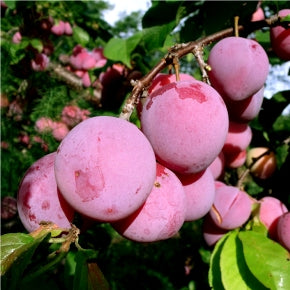
PEMBINA plum
PEMBINA plum

PATTERSON'S PRIDE american hybrid plum SEMI-DWARF (MUSTANG)
PATTERSON'S PRIDE american hybrid plum SEMI-DWARF (MUSTANG)
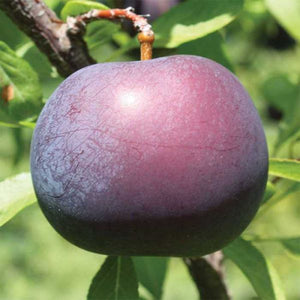
Black Ice plum tree
Black Ice plum tree

KAHINTA American hybrid plum SEMI-DWARF (MUSTANG)
KAHINTA American hybrid plum SEMI-DWARF (MUSTANG)
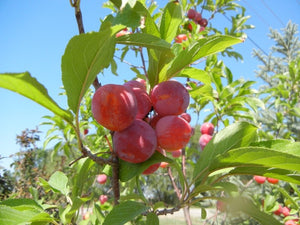
TOKA plum SEMI-DWARF (MUSTANG)
TOKA plum SEMI-DWARF (MUSTANG)

WANETA plum (MUSTANG)
WANETA plum (MUSTANG)
🍑 Underwood Plum Tree
🌸 Origin and type
- Species: Hybrid between Prunus americana (American plum tree) and Prunus salicina (Japanese plum tree)
- Origin: University of Minnesota, United States
- Year of introduction: 1921
- Type: Hardy hybrid plum tree with spreading habit
🌳 Tree characteristics
- Habit: Semi-dwarf, slightly spreading
- Mature height: Approximately 5 m (16 ft)
- Hardiness: USDA Zone 3 (very well suited to cold winters)
- Exposure: Full sun
- Soil: Well-drained, fertile, slightly acidic to neutral
- Growth: Fast, bears fruit in 3 to 5 years
🍑 Fruit
- Shape: Oblong, slightly pointed
- Size: Medium to large (approximately 4 cm in diameter)
- Skin: Dark red, slightly pruinose
- Flesh: Golden yellow, juicy, sweet, superior quality
- Stone: Semi-adherent (clingstone)
- Harvest: Late July to early August
- Use: Fresh, jams, preserves, pastries
- Storage: 1 to 2 weeks in the refrigerator
🌼 Flowering and pollination
- Flowering: Mid-May
- Pollination: Self-infertile
- Compatible pollinators:
- Canadian plum (Prunus nigra)
- American plum (Prunus americana)
- Hybrid plum (Prunus × domestica), such as Pembina
- Planting distance: 3 to 4 m (12 to 15 feet) between trees
🛠️ Cultivation and care
- Planting: Fall or early spring
- Watering: Regular, especially in the first few years
- Pruning: Winter pruning to aerate the branches and promote light
- Thinning: Recommended if the tree bears a lot of fruit
- Diseases: Good resistance to common diseases
🍽️ Uses
- Fresh fruit for eating
- Jams, compotes, pastries
- Less suitable for drying or freezing
💡 Advantages
✅ Very hardy, suitable for cold areas
✅ Compact growth habit, ideal for small gardens
✅ Early harvest (end of July)
✅ Excellent taste
⚠️ Points to watch
- Flowering sensitive to late spring frosts
- Fruits are fragile, require careful harvesting
- Prefer a sheltered location to avoid wind damage
Hardiness Zones
Number of years for production
4 ans

