

JAMAL Semi-Dwarf Apricot Tree (MUSTANG)
Shipping calculated at checkout
40 in stock
Need more? Contact us
This tree needs pollination
Compatible trees:
Harcot semi-dwarf apricot
Harcot semi-dwarf apricot
HARGLOW apricot SEMI-DWARF
HARGLOW apricot SEMI-DWARF

HARGRAND apricot SEMI-DWARF (St. Julien A)
HARGRAND apricot SEMI-DWARF (St. Julien A)
🍑 Jamal Apricot Tree
🌸 Origin and type
-
Species: Prunus armeniaca
-
Origin: Mountains of northern Pakistan
-
Introduction: A selection brought back during Dr Maxine Thompson's fruit-collecting expeditions.
-
Type: Late-flowering apricot tree.
-
Special feature: Selected for exceptional eating quality and good hardiness.
-
Uses: Fresh eating and drying.
Jamal remains relatively little known and is appreciated for its rich flavour and ability to adapt to cold climates.
🌳 Tree characteristics
-
Habit: Spreading to rounded.
-
Mature height: About 3 to 5 m, depending on the rootstock and training.
-
Spread: Varies with pruning and the environment.
-
Hardiness: Zone 4 to 5.
-
Exposure: Full sun.
-
Soil: Fertile, deep and well drained.
-
Growth: Moderate to vigorous.
-
Time to bearing: After a few years of growth.
-
Flowering: Late for an apricot tree.
-
Productivity: Moderate; known more for fruit quality than high commercial yields.
🍑 Fruit
-
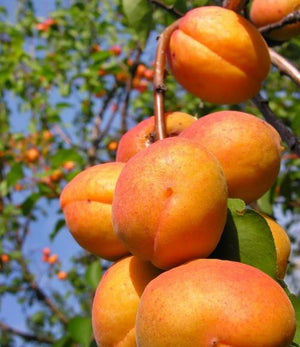
Shape: Round to slightly oval.
-
Size: Medium to large.
-
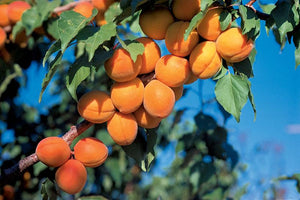
Skin: Yellow-orange to orange when ripe.
-
Flesh: Orange, rich and juicy.
-
Texture: Tender and melting.
-
Flavour: Very sweet, rich and aromatic, with low acidity.
-
Stone: Information unconfirmed.
-
Harvest: Early to mid-August.
-
Uses: Fresh eating, drying, jams, compotes and pastries.
-
Storage: Short to medium; keep cool after harvest.
Its particularly flavourful, low-acid flesh is one of Jamal's main attractions.
🌼 Flowering and pollination
-
Flowering: Late for an apricot tree.
-
Flower colour: White to pinkish.
-
Self-fertile: No, a pollinizer is necessary.
-
Pollination: Plant another compatible apricot cultivar whose flowering overlaps with Jamal.
Pollinizers to consider:
-
Harcot
-
Hargrand
-
Goldcot
-
Harglow
Exact compatibility and overlap in flowering should be confirmed before planting.
🛠️ Growing and care
-
Planting: Spring or fall, outside periods of frost.
-
Watering: Regular during the first few years and droughts.
-
Pruning: Light, preferably in dry weather after harvest.
-
Thinning: Recommended when fruit is too abundant.
-
Fertilizing: A moderate application of compost in spring.
-
Drainage: Essential to prevent root diseases.
-
Winter protection: Protect young trees and avoid late nitrogen applications that delay wood hardening.
🦠 Diseases and resistance
-
Brown rot: Can affect blossoms and fruit in wet weather.
-
Bacterial canker: Monitor branches and the trunk.
-
Fruit rot: Avoid damaged and overcrowded fruit.
-
Prevention: Maintain good air circulation and remove affected parts.
No specific disease resistance is sufficiently documented to attribute particular tolerance to Jamal.
🍽️ Uses
-
Fresh eating.
-
Dried apricots.
-
Jams and jellies.
-
Compotes and purées.
-
Pies and pastries.
-
Home processing and preserving.
💡 Highlights
✅ Late flowering helps limit risks from spring frosts.
✅ Excellent eating quality.
✅ Rich, sweet flesh with low acidity.
✅ Juicy, aromatic fruit.
✅ Excellent for fresh eating and drying.
✅ Noteworthy hardiness for regions with cold winters.
⚠️ Points to consider
-
Requires a compatible pollinizer.
-
Lower productivity than some commercial varieties.
-
Late flowering does not eliminate frost risk.
-
Requires well-drained soil.
-
Fully ripe fruit needs careful handling.
🌱 Why choose Jamal apricot?
Jamal stands out for exceptionally flavourful fruit, sweet, juicy flesh and late flowering. An interesting variety for lovers of quality apricots seeking a fruit tree adapted to cooler climates.
A collector's apricot tree that puts flavour and fruit quality first!
Hardiness Zones
Growth rate
Years to production
3 years
Light
Uses / Special notes

